Introduction to LLM and Transformer Architecture
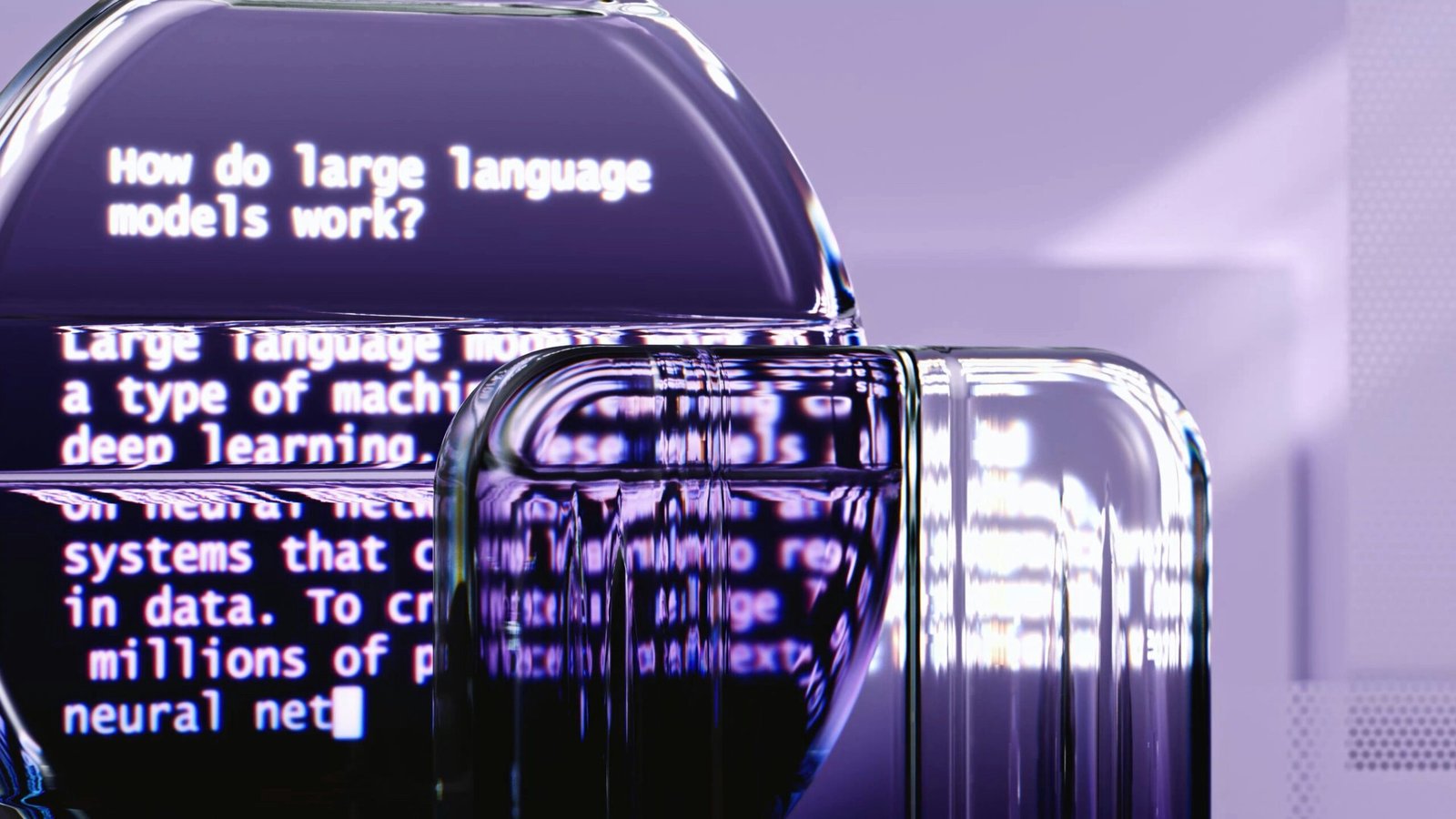
Large Language Models (LLMs) have emerged as a groundbreaking advancement in the field of Natural Language Processing (NLP). These sophisticated models are designed to understand, generate, and manipulate human language at an unprecedented scale. At the core of LLMs lies the transformer architecture, which has transformed the way machines process and learn from linguistic data.
The transformer architecture, introduced by Vaswani et al. in their seminal paper in 2017, operates on a mechanism called self-attention. This means that instead of sequentially processing words in a sentence as previous models did, transformers analyze entire sentences simultaneously. This allows LLMs to capture context more effectively and generate coherent and contextually relevant text. As a result, LLMs have shown remarkable capabilities, such as fluency in text generation, understanding of context and intent, and completing complex tasks across various domains.
LLMs function by training on a vast corpus of textual data, enabling them to learn the nuances of language, including grammar, facts, and even reasoning abilities. The training process involves predicting the next word in a sequence, allowing the model to refine its understanding and improve over time. These capabilities have significant implications, not only in research and academia but also in real-world applications, such as chatbots, automated content creation, and language translation systems.
The significance of transformers in the development of LLMs cannot be overstated; they have set a new standard for performance and efficiency in NLP tasks. By leveraging parallelization and advanced learning techniques, transformers have demonstrated how machines can achieve a level of sophistication that closely mirrors human-like language comprehension. Understanding the structure and operation of LLMs built on this architecture is crucial for appreciating the ongoing advancements in artificial intelligence and language technology.
The Mechanisms of Transformer Architecture
The transformer architecture has transformed the landscape of natural language processing (NLP) with its innovative mechanisms that enhance the efficiency and effectiveness of language models. Central to its design are the self-attention mechanisms that allow the model to weigh the significance of different words in a sentence relative to one another. This process enables the model to capture contextual relationships more effectively than traditional sequential models such as recurrent neural networks.
One of the key features of the transformer is the use of multi-head attention. This mechanism allows the model to attend to different parts of the input data concurrently by creating multiple representations of the same input. Each head learns distinct aspects of the data, contributing to a more comprehensive understanding of the input sequence. The combination of these attention heads results in a robust model capable of grasping complex linguistic structures.
Another vital component is the positional encoding, which injects information about the position of each word in a sequence. Since the transformer processes all words in parallel, the absence of inherent sequential order could hinder its comprehension. Positional encoding helps the model differentiate between words based on their positions, ensuring that the sequence’s integrity is maintained during processing.
In conjunction with these attention mechanisms, the feed-forward neural networks play a crucial role in transforming the output of the attention layers. Each attention output undergoes linear transformations and nonlinear activations, which elevate the model’s capacity to learn intricate relationships within the data.
By integrating self-attention, multi-head attention, positional encoding, and feed-forward networks, transformer architecture exhibits unparalleled proficiency in processing large datasets. This efficiency has made it a cornerstone of many state-of-the-art NLP systems today, underscoring the importance of understanding its foundational mechanisms.
Training and Fine-tuning LLMs
Large Language Models (LLMs) based on transformer architecture are primarily developed through a two-step process: pre-training and fine-tuning. During the pre-training phase, these models are exposed to vast amounts of text data sourced from books, websites, and other documents. This phase enables the model to learn general language patterns, contextual relationships, and semantic understanding without any specific task orientation. This unsupervised learning is crucial, as it allows LLMs to grasp a broad range of linguistic constructions and vocabulary.
Once the pre-training is complete, LLMs undergo fine-tuning, which is a targeted process where the model is adapted for specific tasks or domains. Fine-tuning generally involves supervised learning on a smaller, specialized dataset related to the intended application—such as sentiment analysis, summarization, or question answering. Through this tailored training, the model optimizes its performance and becomes more adept at generating relevant and contextually appropriate outputs. Fine-tuning often requires fewer computational resources and training time compared to the extensive pre-training phase.
However, training and fine-tuning LLMs are not without challenges. The computational requirements for building and refining these models can be substantial, often necessitating powerful hardware such as GPUs or TPUs and significant amounts of time. Additionally, there are concerns regarding biases present in training data, which can lead to biased outputs from the LLM when applied in real-world scenarios. Addressing these biases is crucial for ensuring that the outputs of LLMs are fair and representative. Therefore, ongoing research into debiasing techniques and the deployment of quality datasets is vital for enhancing the utility and ethical implications of LLM technology.
Applications and the Future of LLMs and Transformers
Large Language Models (LLMs) and transformer architecture are at the forefront of AI technology, with a broad spectrum of applications across various sectors. In healthcare, these advanced models facilitate patient engagement through chatbots and assist healthcare professionals by analyzing medical literature and patient data, ultimately improving diagnostic processes. By utilizing natural language processing, LLMs can also streamline administrative tasks, allowing healthcare providers to focus more on patient care. Similarly, in finance, LLMs are transforming how institutions operate by automating customer service operations and predictive analytics. They enable financial institutions to provide personalized services through AI-driven chat interfaces and assist in risk assessment by analyzing vast amounts of financial data.
Moreover, in customer service, transformer-based models are increasingly deployed to enhance user experience. Chatbots powered by LLMs can understand nuanced customer inquiries and respond accurately, reducing wait times and improving satisfaction. The implementation of these models not only increases operational efficiency but also contributes to substantial cost savings for organizations.
Looking towards the future, ongoing research into LLMs and transformer architectures continues to evolve. There is a growing emphasis on making these models more interpretable and efficient, addressing the challenges posed by resource consumption and energy use. As the landscape of AI technology shifts, the exploration of ethical implications—such as bias in language models and the potential misuse of AI—remains critical. Researchers are actively investigating how to mitigate these risks, thereby encouraging responsible AI development.
In conclusion, the applications of LLMs and transformer architectures are vast and growing in significance across numerous sectors. As technological advancements continue, ongoing developments in this field promise exciting prospects while also requiring careful consideration of the ethical frameworks necessary to guide their implementation.
Understanding Transfer Architecture
Transfer architecture has become a pivotal strategy in the field of artificial intelligence (AI), enabling models to leverage knowledge from one domain to improve performance in another. This concept can dramatically reduce the time and resources needed for training AI systems. By applying what has already been learned, AI can accelerate its learning curve effectively.
Example 1: Image Recognition
One notable application of transfer architecture is in image recognition. Pretrained models, such as Google’s Inception or ResNet, have been exposed to vast datasets. By utilizing these models, developers can fine-tune them using a smaller, domain-specific dataset. This not only saves computational power but also enhances accuracy in recognizing specific images or patterns, significantly benefiting industries from healthcare to autonomous vehicles.
Example 2: Natural Language Processing
In the realm of natural language processing (NLP), transfer architecture has transformed how AI understands human language. Models like BERT and GPT-3 are trained on a diverse set of texts, allowing them to grasp various linguistic nuances. By fine-tuning these models for specific scenarios, such as sentiment analysis or chatbots, businesses can deploy highly effective tools that adapt naturally to the conversational context.
Conclusion: The Road Ahead
As the AI landscape continues to evolve, the importance of transfer architecture cannot be overstated. Its ability to adapt and apply previous knowledge will be crucial in developing systems that are not only more efficient but also more aligned with human-like reasoning. The examples discussed illustrate just how impactful this approach can be in the advancement of artificial intelligence.